
Maryland Arrest Log Layers
Maryland keeps no single statewide arrest register. The record trail is spread across agencies. The Maryland Department of State Police posts newsroom releases and selected barrack reports, while county sheriffs, county police, and municipal departments may run their own dated news or activity pages. Regional newsrooms cover selected events, and the court system holds case information once a filing exists. Each layer answers a different question. One tells you who an agency says it arrested, another where someone may be held, a third how a court case proceeded. The dated window varies too. A release might cover one incident, a named operation, or a set reporting period. An archive page can keep stories for a time, yet the publisher's website sets the visible depth. That depth says nothing about how long a police or jail record must be retained. Want current custody only? Use the separate Maryland 24 Hour Arrests page. An old log is not a live roster.
| Source layer | What it may publish | Coverage boundary |
|---|---|---|
| MDSP newsroom and barracks | Selected arrests, enforcement events, and dated activity reports | Not a live statewide booking log; reports may be event-driven. |
| County and municipal agencies | Local police news, activity summaries, or dated blotters | Selection, archive depth, and update pace vary by agency. |
| News organizations | Reported arrests, police statements, court updates, and corrections | Editorial coverage is regional and selective, not an official roster. |
Maryland Weekly Arrest Reports
Older MDSP College Park releases used a clear weekly form. Each stated a week. It added selected calls, collisions, community-policing activity, DUI arrests, and named arrest rows. One covers February 3–9, 2020. Its rows give an event date or time, an age, and a city. A listed charge rounds out each entry. That is history, not a live feed. The archived College Park calls-for-service and arrest report preserves the stated period and its selected activity.
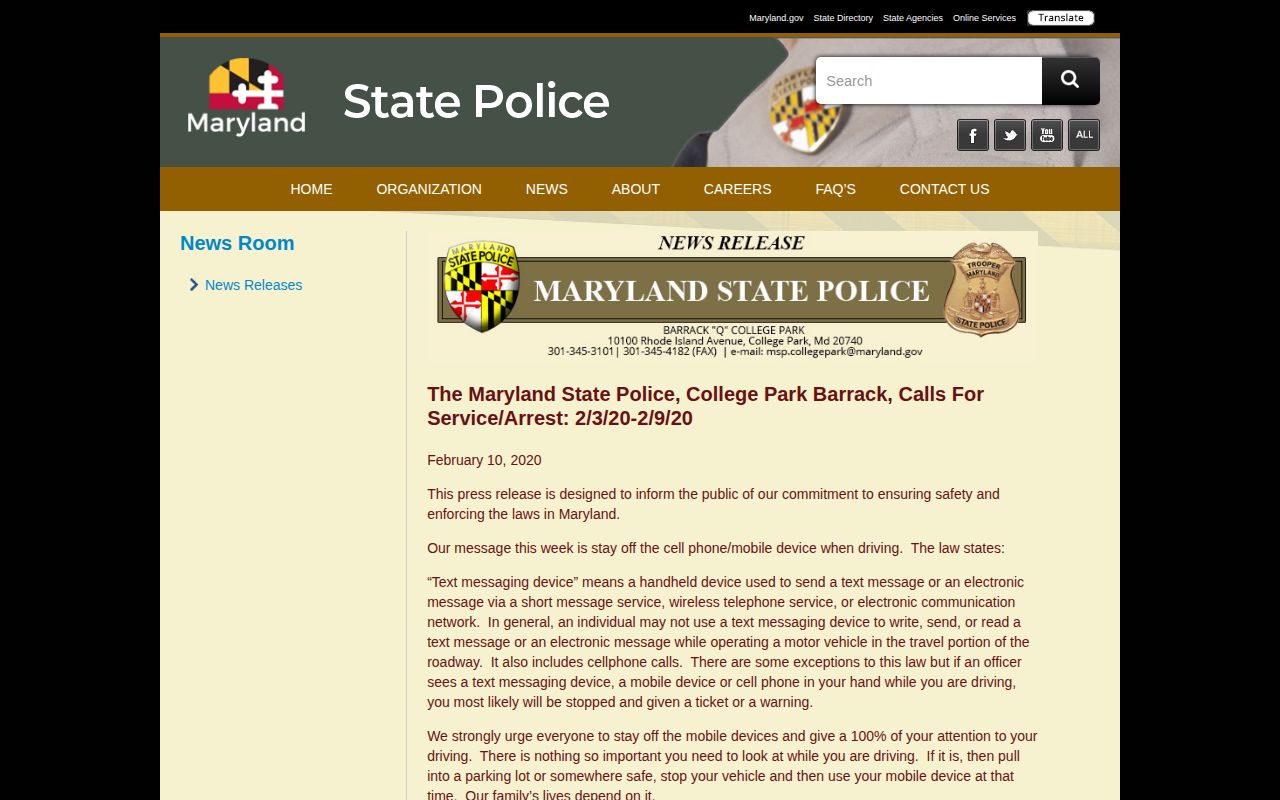
The release is selective. It is tied to its listed week, not to all arrests or current statewide booking activity. Today's MDSP newsroom posts are more event-driven. One release may describe a single arrest or operation while another barrack posts nothing at all. Keep the post date and stated event period together. The old weekly format does not prove a current schedule.
Note: A dated weekly report preserves the agency's selected public account, not every call, booking, or person held during that week.
Maryland DUI Arrest Archives
MDSP's 2020 archive holds dated DUI and barrack roundups. It helps you locate old releases, not current custody. Check each item's post date and activity period, because an old arrest announcement cannot tell you where a person is now. The Maryland State Police 2020 newsroom archive shows how past releases are organized.
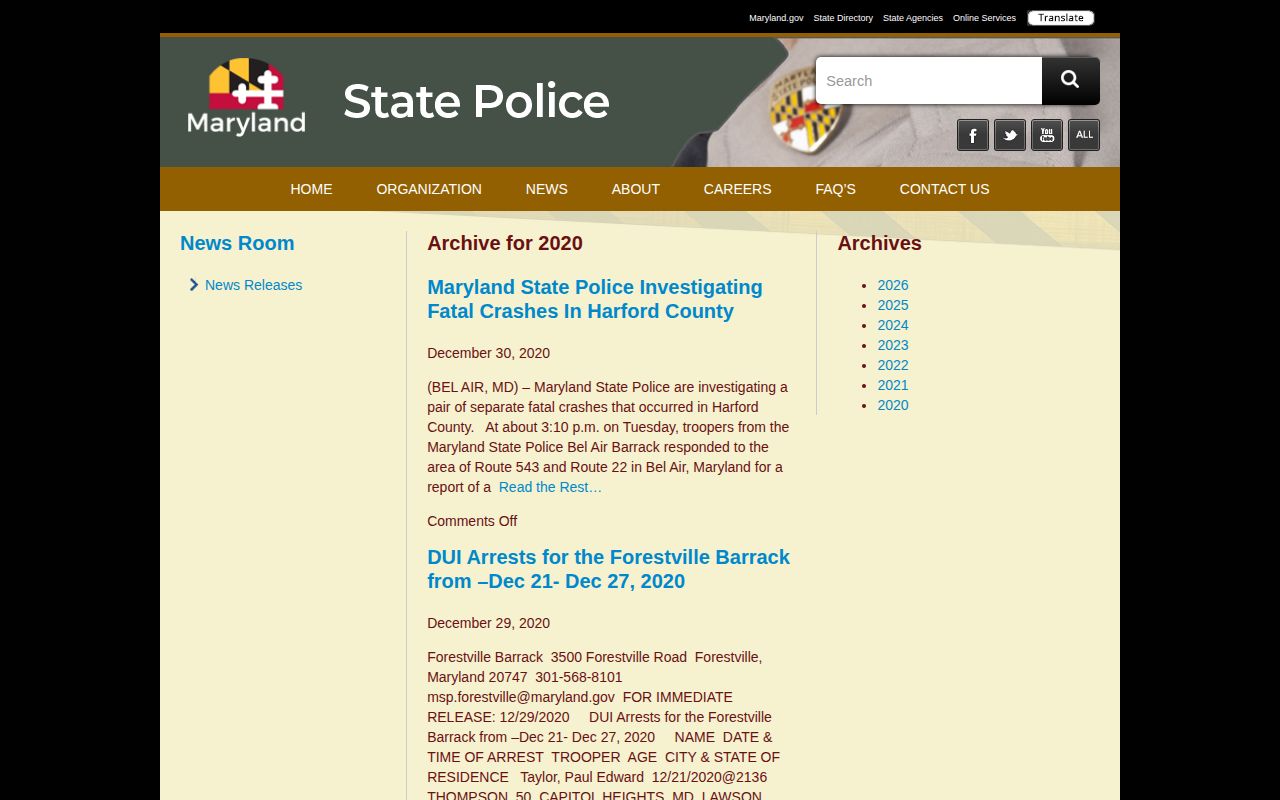
An online archive is a website feature, not a retention schedule, and older pages can be incomplete.
Read a Maryland Arrest Log
Separate the event date from the posting date. An agency's account often goes up days later. Local blotters may cover a different range or only selected calls, since Maryland agencies share no single log form or update period.
- Check the source. Note whether MDSP, a local agency, a court, or a newsroom published it.
- Compare dates. Read the event date, post date, and stated reporting period.
- Read only shown fields. Note the place, agency, charge, and any custody detail.
- Confirm custody separately. A past release does not show that the person remains jailed.
- Check the court outcome. Use the court record or ask the clerk if needed.
Those fields come from the historical MDSP example, and other logs may show less. A missing detail proves nothing.
| Field in a dated report | How to read it |
|---|---|
| Reporting week or date range | The time span summarized by that report. |
| Event date or time | When the selected call or arrest was reported to have occurred. |
| Barrack, agency, or location | Which office or place the item concerns. |
| Name, age, or city | Details some historical arrest rows published; verify identity with the source. |
| Listed charge | An charge at the time of publication. |
Note: A posting date and an arrest date are separate facts, so record both when comparing items from different agencies.
Maryland Weekend Arrest Logs
Maryland sets no statewide rule for weekend or holiday arrest posts. Each agency does it its own way. A public newsroom may publish less during a short stretch even while arrests continue, or it may combine several days into a later release. The old College Park reports used a week-long format. That past form sets no current cadence. An empty weekend archive does not mean a weekend without arrests. Check the report's own stated window first. Then ask the responsible agency about a specific event when the trail runs thin. A same-day custody result measures something else. It shows people listed at the moment of a search and can omit anyone already released.
Maryland News Arrest Blotters
Regional outlets publish selected arrest stories, police statements, court updates, and corrections. They are editorial sources. They are not booking databases or statewide lists. Entry points include WBAL-TV 11, CBS News Baltimore/WJZ, WMAR 2 News, WBOC, and WMDT, though their coverage areas differ. A story can add reporting a roster lacks. It may quote an early police statement. It may also skip later case events. Keep the outlet and the story date in view. Confirm custody with the detention agency and any case outcome with the court. If an article needs an update, send the outlet the exact URL and the public record that supports a correction.
Note: Regional newsroom coverage can add context, but it will not match the boundaries or completeness of an agency's records.
Maryland Arrests and Court Records
An arrest log and a court docket answer different questions. The log preserves an agency's early account of an arrest. A docket, by contrast, tracks filings and procedural events once a case opens. The official Maryland Judiciary Case Search summarizes court activity across the state. It is not a mirror of every booking. Some outcomes stay off the public summary. Others require access at the courthouse itself. A current booking card can still list an initial charge. It may say nothing about how the case ended. For present custody, use the detention source. For the case file, use the court. Booking is intake; disposition is the court's result, a separate and later stage. When a log and a court summary disagree, start with dates. Ask the clerk or agency for the governing record. The statewide Maryland arrest-record overview ties booking, custody, and court records together.
Maryland Arrest Archives and Retention
A dead blotter link proves little. Likewise, an old news story still online says nothing about whether the official record remains public. Maryland retention runs on agency schedules, not blanket rules. The State Archives schedules spell out how long records are kept, transferred, or destroyed, and those schedules can change.
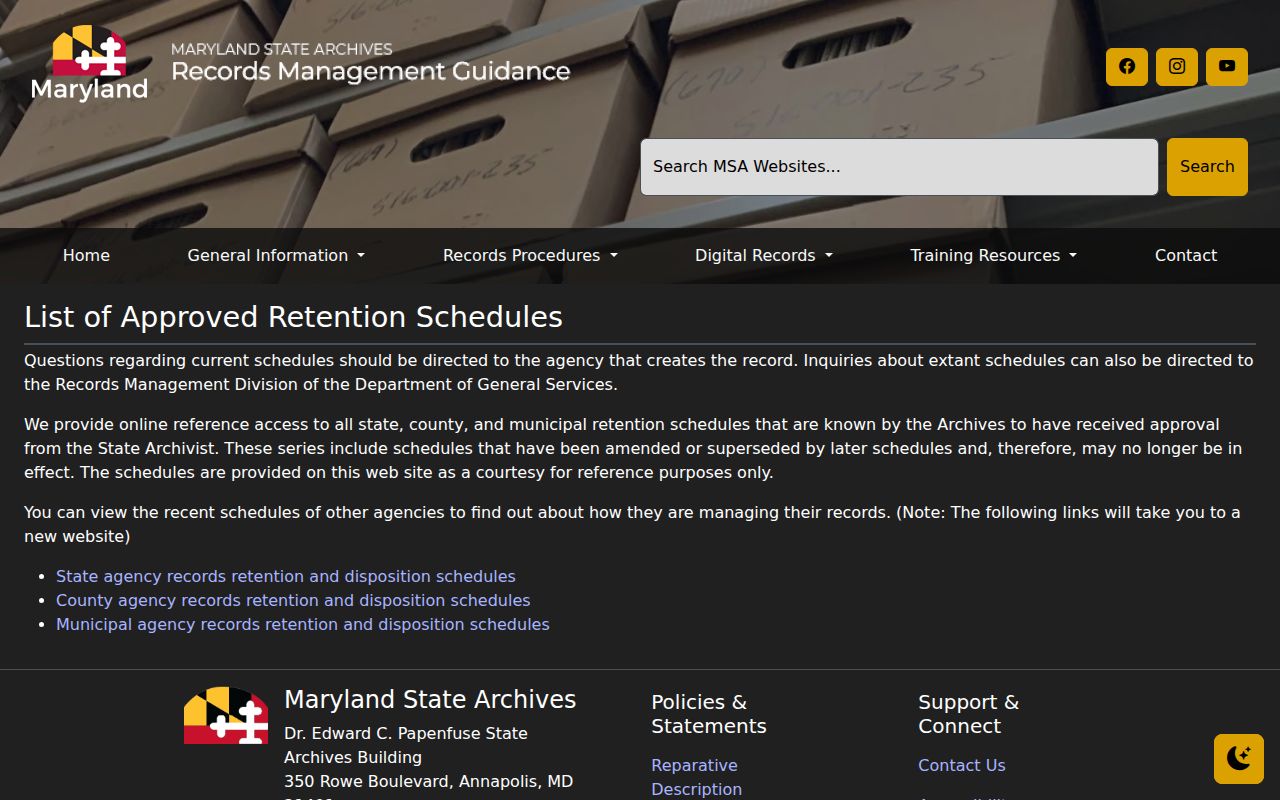
One historical MDSP mugshot-negative schedule kept negatives for ten years in the Criminal Records Central Repository, then 25 more at the State Records Center before destruction. It never governed county booking photos. Separately, Maryland Penitentiary Prisoner Records, S275 spans 1811–1978. Details vary by era. Depending on the period, entries hold names, physical details, conviction county, sentence, and release, though access limits apply.
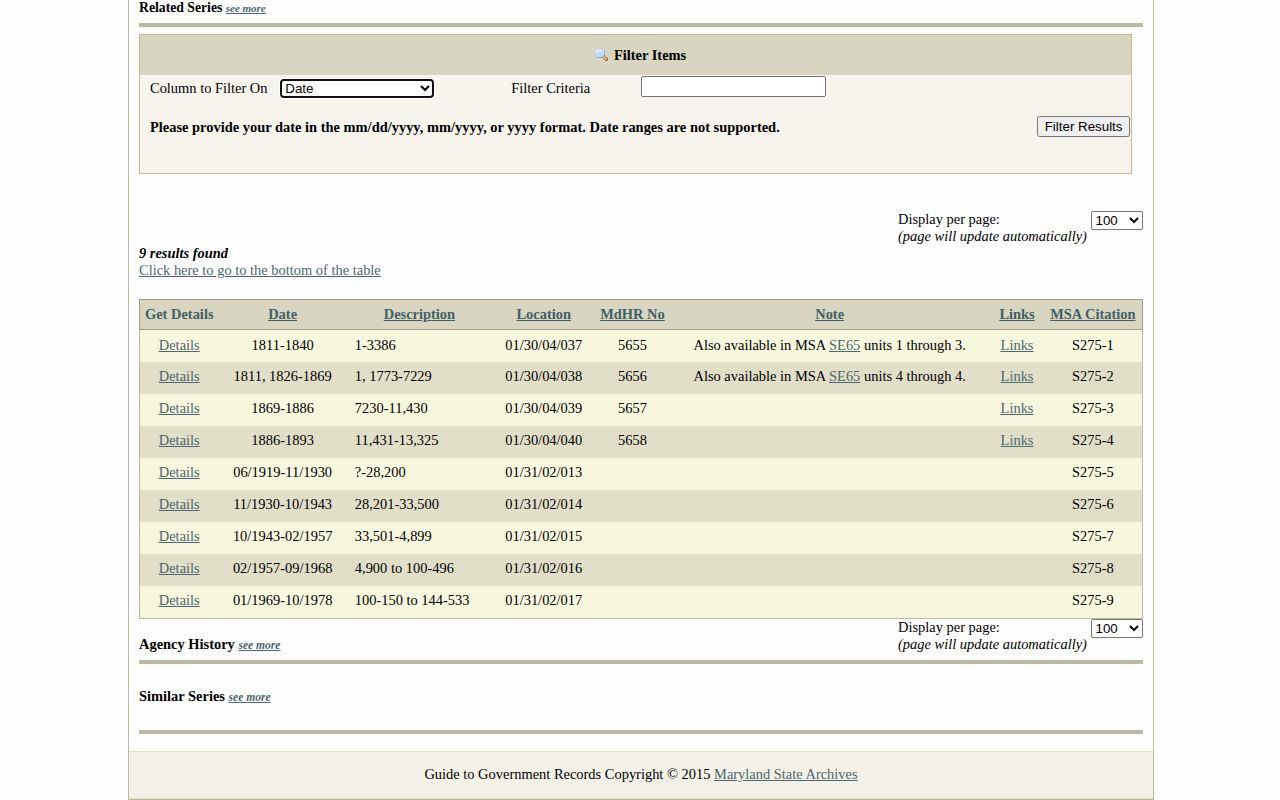
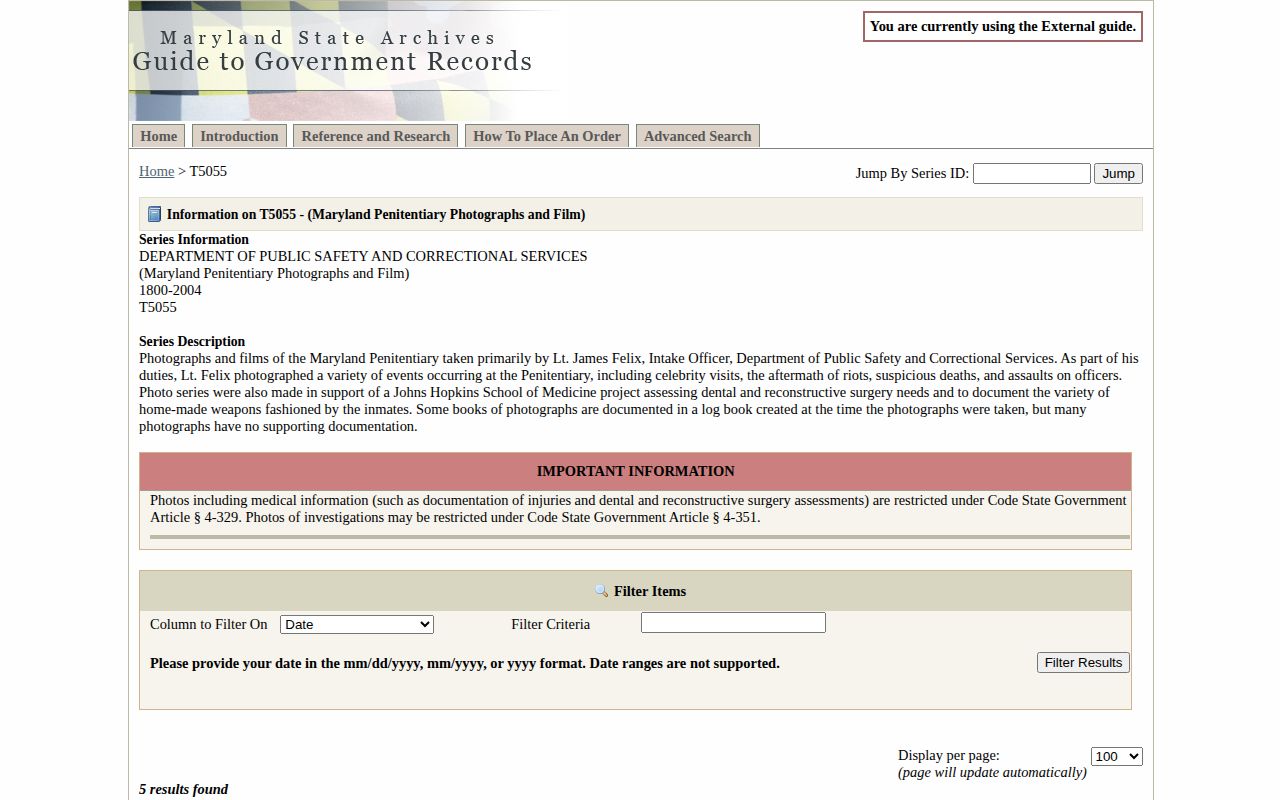
S275's 1811–1978 span ends long before recent arrests. Use it for history, not a custody check. The separate T5055 photographs and film series covers roughly 1800–2004 of varied institutional imagery. Medical photographs are restricted by law, and many images lack a public copy online.
A record may sit beyond a page's visible window. Write to the office that created it. Keep the request narrow. Name the office, the approximate event date, the record type, and the reporting span. The Maryland Attorney General's Public Information Act FAQ sets the clock. A custodian should act promptly. The outside limit is 30 days. What if a record cannot be produced or denied within ten working days? The office must send written notice then. It should carry an estimated response time, a fee estimate, and the reason for delay. The first two hours of search and preparation are generally free. Reasonable costs may follow. No office must create a statewide arrest log. Ask instead for a specific booking, release log, dated blotter, or report. If part of a record is withheld, request the segregable portions. The Archives' records-officer guidance covers paper, electronic records, and photographs. If the original has moved to the Archives, use its catalog and request process. Skip the old news archive.
Note: A web archive's visible date range and an agency's legal records-retention period answer different questions.