
How Maryland Recent Arrests Appear
No statewide roster exists for Maryland bookings. Each county and city builds its own system. A detention center lookup may list people in custody right now. A police newsroom may report selected arrests. A court portal may open a case once it is filed. Maryland VINE adds custody tracking with alerts. Each source answers a different question. A person cited and released, moved to another facility, or booked under a protected record may show up nowhere near someone held overnight.
Photo rules differ just as much. Some current-custody pages display cards with images. Others show plain text, a placeholder, or no photo field at all. The Worcester County Sheriff's inmate search is a good example of a text-led custody page. Its headings cover inmate number, name, date of birth, housing block, cell, and details. Any live interface can change over time. A blank photo slot reflects that public view, nothing more.
To see this style of interface yourself, open the Worcester County Sheriff's inmate search.
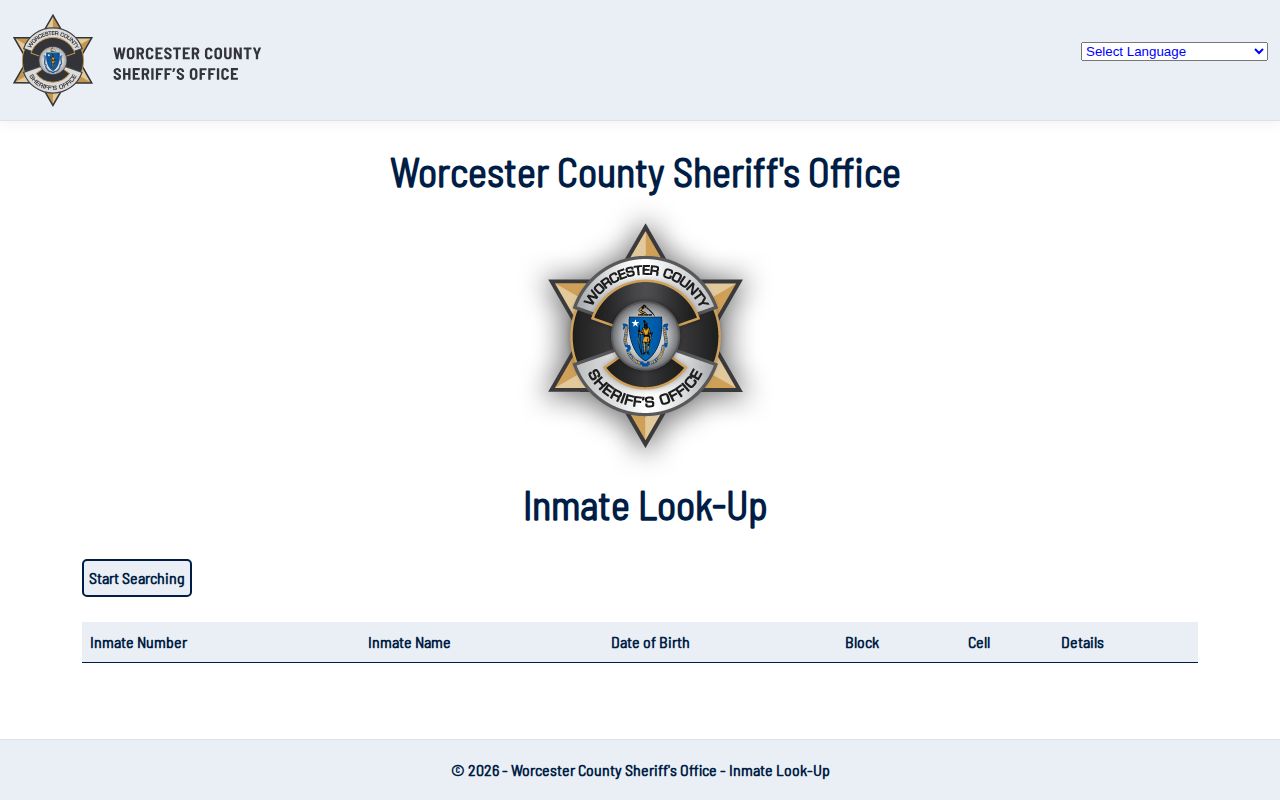
The roster above shows one county's way of publishing custody fields without a photo gallery. The person's status and the original custodian remain the places to verify anything.
These gaps matter when tracking Maryland recent arrests. A state police release may name the arresting barrack. Yet the county facility controls the booking, release, transfer, and photo display on its end. City police can cite and release a person with no county roster entry at all. Treat the arresting agency, the booking destination, and the court record as three separate points. Each sits at a different place on the trail.
Route by Arrest County
The booking site rarely matches where a person lives or where the case gets heard. Start where officers made the arrest. Then open that jurisdiction's official custody source. Maryland's 23 counties and Baltimore City share neither one roster nor one photo policy. A search in one county's system cannot rule out a booking in the next county over.
Use the County Directory to pick the right locality site. When the arresting agency is known, check its release. It may name the barrack, municipality, or county. For a Maryland State Police arrest, the news post may identify the barrack. The county facility holds the actual booking record. Search options vary locally. The fields below are conditional rather than a promise of identical search boxes.
| Field to try | How it helps | Availability |
|---|---|---|
| Name | Start with the person’s name as known; check spelling and any alternate format the system supports | Common locator entry, but the search controls vary by locality |
| Booking or inmate number | Use a known number to narrow a result to one local record | Only where the county page accepts that number |
| Booking date or status | Read the date and custody state on the result before treating it as current | May be a result detail rather than a search filter |
| Charge or bond detail | Use it to distinguish entries when shown; a charge is still an charge | Often an entry detail, not a statewide search field |
- Open the official county or city custody page for the place of arrest.
- Enter the name or local number only in fields the page actually offers.
- Check the booking date, current status, and any displayed charge or bond detail.
- If the match is missing or too new, contact the custody record unit and request the specific existing record.
Someone cited and released, transferred, or freed quickly may never land on a current roster. A failed search does not mean no arrest occurred.
Check Arrests Today
Checking arrests today means hunting down the right local source, not querying one Maryland-wide feed. Some counties run a current inmate locator. But Maryland publishes no complete date-bounded list of every arrest in the last 24 hours. Even a live custody page can omit people. Some were released before you looked, or their record stays private. The Anne Arundel County inmate locator fits this pattern. It offers current custody data, not a round-the-clock booking feed.
Start by identifying the arrest county or Baltimore City. Open that locality's official custody page. Note any booking date, status, and last-updated stamp the agency posts. With no same-day filter, treat the page as a current custody list. If the event is too new or the person is missing, call the listed records unit. A written request can follow when a booking record or photo is not online.
For a wider, dated archive, Maryland arrest-log options include county and police news releases. Older activity pages and selected agency reports also count. None are complete booking ledgers. A same-day custody check and a multi-day blotter are different searches with different limits.
| Window | Maryland source pattern | Where to continue |
|---|---|---|
| Same day or current custody | County locator or dated local release; no complete official statewide 24-hour feed was verified | Maryland 24 Hour Arrests |
| Several days or older posts | County and municipal blotters, dated State Police reports, newsroom archives | Maryland Arrest Log |
A late posting can stem from data transfer, review, or a page built without daily updates. A roster's silence proves nothing. It shows neither a confirmed release nor a confirmed absence of an arrest.
Maryland Arrest Sources
Start any search with official channels. A county custody page shows who is in that jail right now. The Maryland State Police newsroom posts selected agency announcements. Maryland Case Search pulls court summaries, not booking activity. Maryland VINE reports custody status and sends alerts when a participating system logs an event. Each service covers a different layer, so match the tool to the question at hand.
Secondary state pages can point you toward a source. They are not government records, though. Coverage drifts stale or thin in some counties, and no third-party page tracks arrests as an official roster would.
| Channel | Photo? | Official? | How to use it |
|---|---|---|---|
| County or city custody page | Sometimes, subject to local policy | Yes | Use for current local custody; released people may disappear |
| Maryland State Police newsroom | May include a release photo | Yes | Read selected arrest and enforcement news, not a complete feed |
| Maryland Case Search | No booking-photo function | Yes | Read public case summaries and visible dispositions |
| Maryland VINE | No | Yes | Check custody and alerts when a local system supplies an event |
| Busted Newspaper Maryland | May reproduce images | No | Secondary county material; publisher says coverage is incomplete |
| RecentlyBooked Maryland and Maryland Arrests.org | May display copied booking photos | No | Coverage and dates change; neither is a state roster |
| Mugshots.com Maryland, Mugshots.zone | May show publisher images | No | Maryland coverage is uneven or unverified; check the source |
| WBAL, WJZ/CBS, WMAR, WBOC, and WMDT | Possible story image | No, editorial | Read regional reports or corrections, not a booking list |
A statewide tool never replaces the arresting county's own record. A secondary page may surface a name. Take the date and jurisdiction back to that agency, then check the court side for the case. News stories can add detail or a correction. The Mugshots.com Maryland section shows how uneven county links can get. That is common on a secondary publisher.
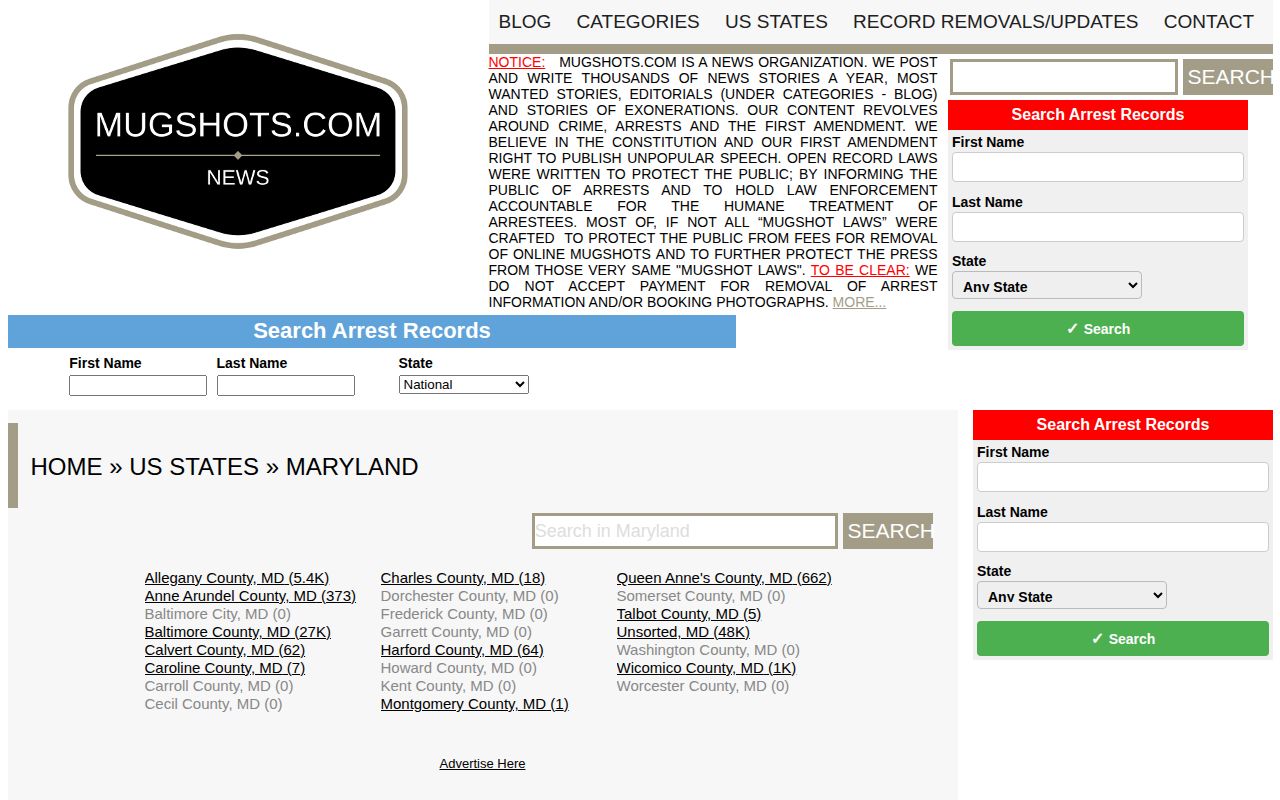
The state landing page makes that uneven county coverage easy to see. Its search tools are not an official Maryland arrest record, nor a complete photo archive.
What the Booking Record Shows
A booking record starts at the local level. It can tie an arrest to the booking date and place. The charge entered at intake appears too. So can a booking number, bond details, custody status, and a photo if the agency publishes one. Fields differ from county to county and by record type. A roster card is a public view, not the full file or a certified statewide criminal history.
State custody works differently. The Maryland Department of Public Safety and Correctional Services (DPSCS) locator covers people committed to the Commissioner of Correction in specified state settings. It is not a list of newly arrested people. Released or escaped individuals are excluded. Some people in DPSCS custody may still be omitted. The locator shows no public photo field.
| Record field | What it can show |
|---|---|
| Name and booking or inmate number | Identity as entered by the custodian and a record key, when the local interface provides one |
| Booking date and custody status | When local processing appears in the system and whether the person is currently listed |
| Charge and bond | The charge recorded at that stage and any bond field the system displays; neither is a conviction |
| Photo | A booking image only where the agency’s public policy and interface expose it |
| DPSCS name and location result | Whether an eligible person appears in a current state custody locator, subject to listed omissions |
| Court case and disposition | A separate court record, not a field that every jail roster carries |
A custody change can pull a person off a live roster. The booking record still stands behind it, and the status table below keeps those stages apart:
| Stage | Likely public source | What disappearance or a match means |
|---|---|---|
| Just booked | County booking feed or current roster | A recent entry may lag while the agency processes or posts it |
| In custody | Local inmate locator or VINE | Shows a current system result, subject to transfer and data gaps |
| Released | Records custodian or later court record | The person may drop off the roster while the booking record remains requestable |
| Sentenced to state custody | DPSCS Inmate Locator | State-custody search replaces a county booking lookup; released people are not listed |
Read every field in context. An arrest charge can shift before court. A bond value says nothing about the outcome. When a case summary leaves questions open, match a public case number or call the court clerk for the docket. For state custody, use the official DPSCS Inmate Locator.
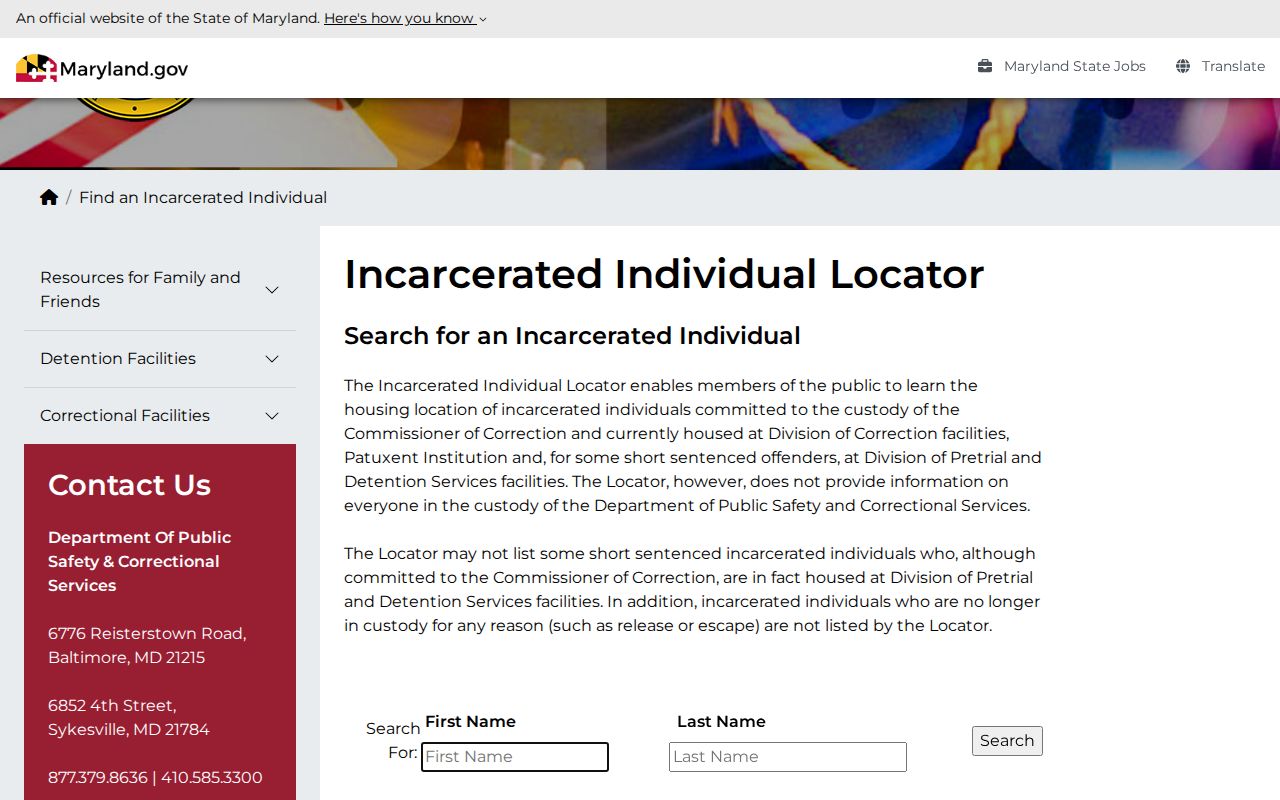
The DPSCS locator is a state-custody lookup, not a county booking roster. Its own omission warning matters whenever a search comes back empty.
Maryland Mugshot Photo Rules
Maryland takes a booking photo at the jail or police station when someone is arrested. What happens next varies. No statewide rule tells counties how to display a mugshot online. Some county rosters show an image with each arrest. Others stay text-only. A few pages offer no photo field at all. Even when the agency holds the photo, it can be withheld, delayed, or kept out of the public search. The county custodian's own page is the right place to ask about a specific booking photo.
State custody works differently. The DPSCS Inmate Locator covers certain populations held in state custody, and its public interface displays no booking-photo field. The federal BOP locator is similar. It lists custody details but no mugshot gallery. Both answer post-sentencing or federal questions, not who was arrested in a Maryland county today. Third-party sites copy images from local sources. Those copies can outlive the official page or miss a later court update.
Fees for mugshot removal are their own issue. Maryland Commercial Law §14-1324 regulates website operators that charge to take down an arrest or detention image. A qualifying person can seek removal at no cost once the source record was expunged, shielded, removed from public inspection, or the judgment was vacated. Send the request by certified mail or through a secure email channel the site offers. The operator then has 30 days to remove the image. Confirmation must follow within five business days. Miss those duties and it counts as an unfair or deceptive trade practice under Maryland law.
The law is newer than it sounds. It began as 2015 House Bill 744 and took effect October 1, 2015. The remedy stays narrow. It targets fee-charging sites after a qualifying record change. It does not force counties to publish every mugshot, nor compel removal of an accurate arrest story.
Publishers also run voluntary policies of their own. Busted Newspaper's form asks for the listing URL plus court papers showing expungement, dismissal, nolle prosequi, not guilty, or sealing. It reported five to ten days for review, with no charge on that form. RecentlyBooked takes free requests for dismissed, expunged, sealed, wrong-person, duplicate, juvenile, or outdated listings. It will not drop an accurate current public record on request alone. Mugshots.com allows free removal or updates for some documented outcomes, with review of up to ten business days. Read each live policy first.
Newsrooms take a different route. WBOC generally keeps accurate arrest coverage even after a later acquittal or expungement. WMAR describes a review path for corrections and updates. Neither promises deletion every time. Save the exact story URL and send the publisher a documented correction when a report is wrong.
A §14-1324 request costs nothing. Its written deadline protects the requester. Skip any service that promises guaranteed removal everywhere, since the source agency, a court order, publisher policies, and search caches are separate records.
One removal does not clean the whole web. Copies can sit in search caches, news archives, screenshots, or another publisher's database. Fixing one source clears only that copy. The Mugshots.com policy page is one example of a free removal or update route.
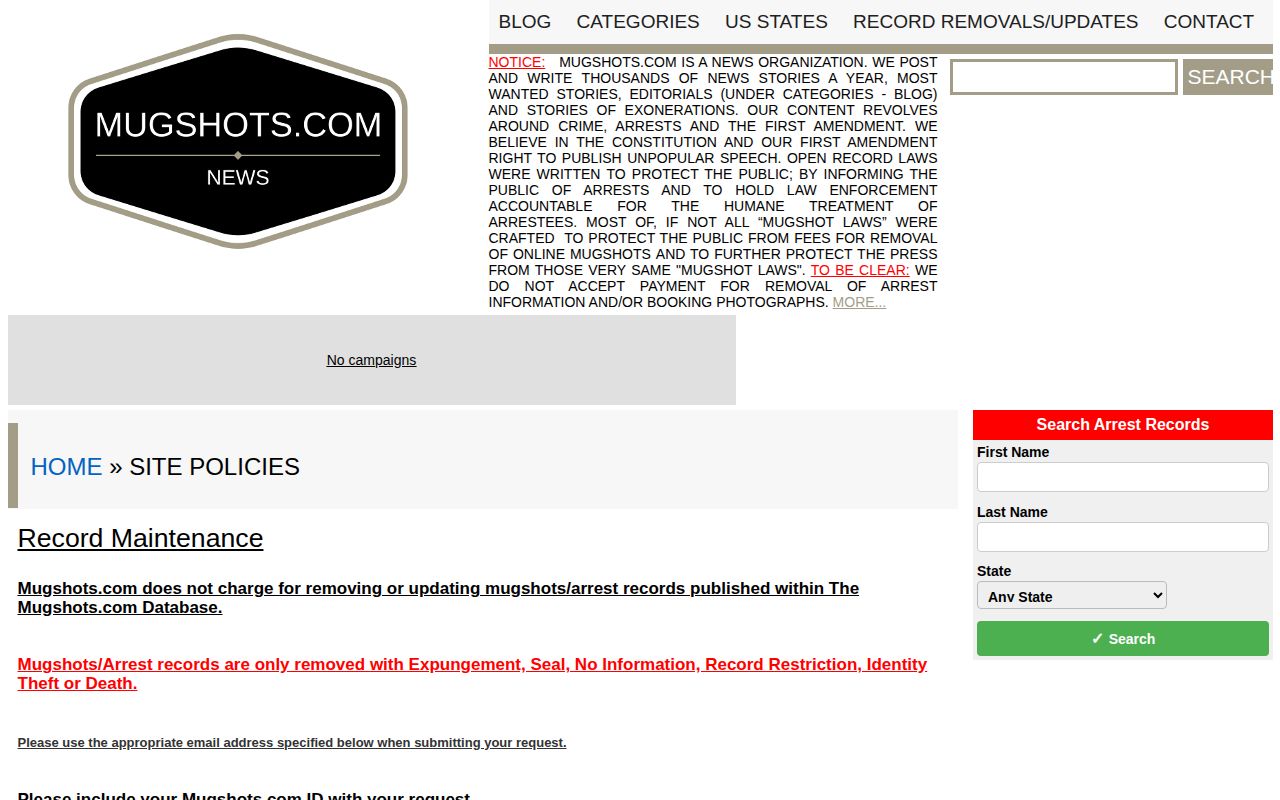
That policy is one secondary path only. Its terms can change, and it does not replace Maryland law or a government record order.
Request Maryland Booking Records
When a public search comes up empty, ask the agency that created or holds the booking record. Maryland's Public Information Act covers records that already exist. It builds nothing new. A custodian need not create a statewide arrest list or answer general questions. Records split across offices, too. A county sheriff, a local police department, a detention agency, State Police, or a court clerk may each hold one piece.
A focused request speeds things up. Name the person and the approximate arrest or booking date. Include the jurisdiction, facility, and arresting agency. Say exactly which record you want, and ask for any segregable public portions if part of a file is withheld. One request to the arresting officer may never reach the county jail's separate custody file.
- Find the arresting agency and booking jurisdiction from an official release, citation, or known case detail.
- Check the locality’s current custody page and Maryland Case Search for a public case summary.
- Send a written PIA request to the custodian for the specific existing booking record, photo, arrest report, or release entry.
- Ask the office to identify the legal basis for any denial and to release segregable material where allowed.
- Keep the request and response. If a record is not held there, ask which custodian may have it.
The Maryland Attorney General's PIA guidance sets the clock. A custodian should act promptly and no later than 30 days. Sometimes the office cannot grant or deny within 10 working days. It must then send written notice. The notice covers an estimate, fees, and the reason for delay. Fees must stay reasonable. The general rule gives two free hours of search work. Copy fees and special work may follow separate schedules. For a plain-language look at requests and fees, see the Maryland Attorney General's PIA FAQ.
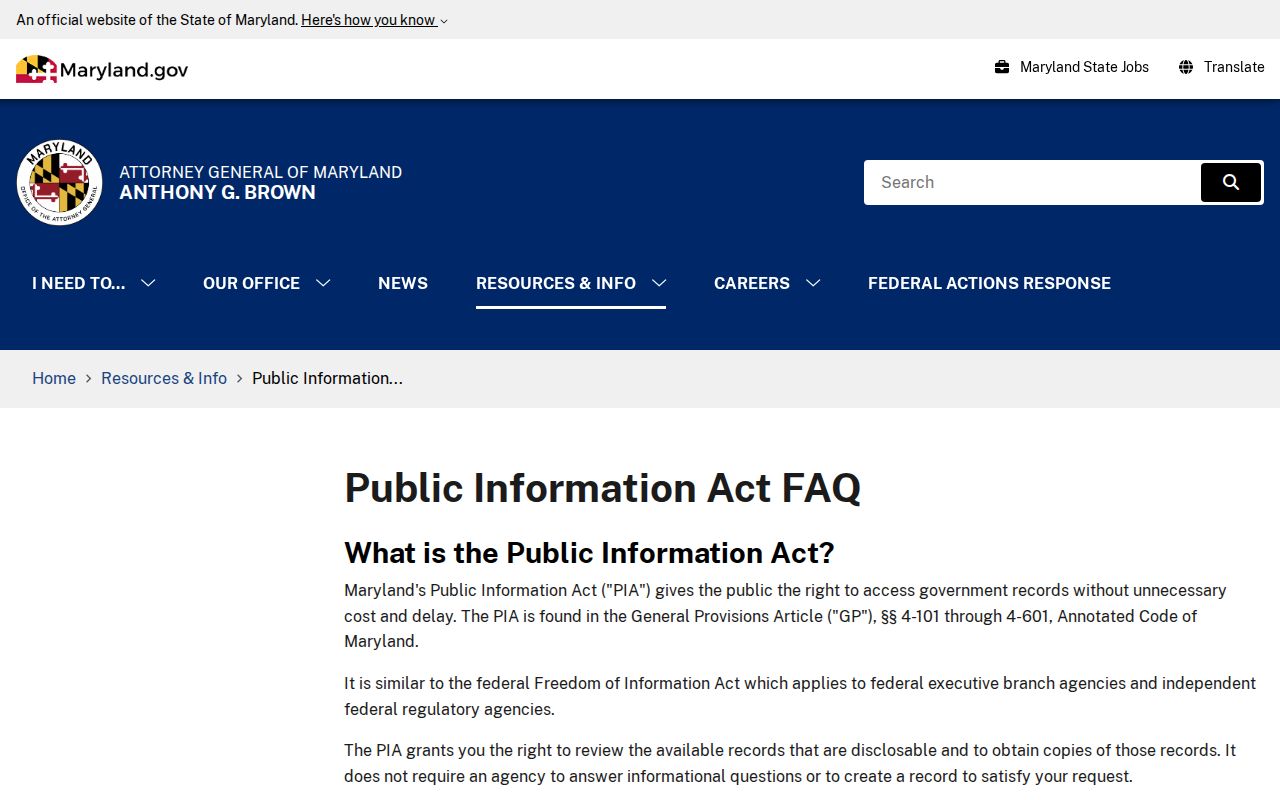
The Attorney General's FAQ explains how to find a custodian and read a fee estimate. The office that keeps a booking record still handles the request itself. State police material goes through MDSP. That agency posts its own report and PIA routes. Corrections requests start with DPSCS. Identify the right record layer there, since the inmate locator only searches current eligible custody. The PIA cannot erase records. It cannot change a court result either. Nor can it guarantee access to investigatory, juvenile, privileged, sealed, or protected material.
Maryland Wanted Lists and Warrants
No single Maryland page lists every open warrant. The Maryland Coordination and Analysis Center (MCAC) offers a statewide gateway to agency wanted pages. Start with the official MCAC Most Wanted gateway to reach agency-maintained profiles and tip routes. Each agency keeps its own entries. A profile may show a name, a description, and the alleged offense or warrant context. It also lists an official tip route. Entries can go stale. A case may change and the posting vanishes without notice.
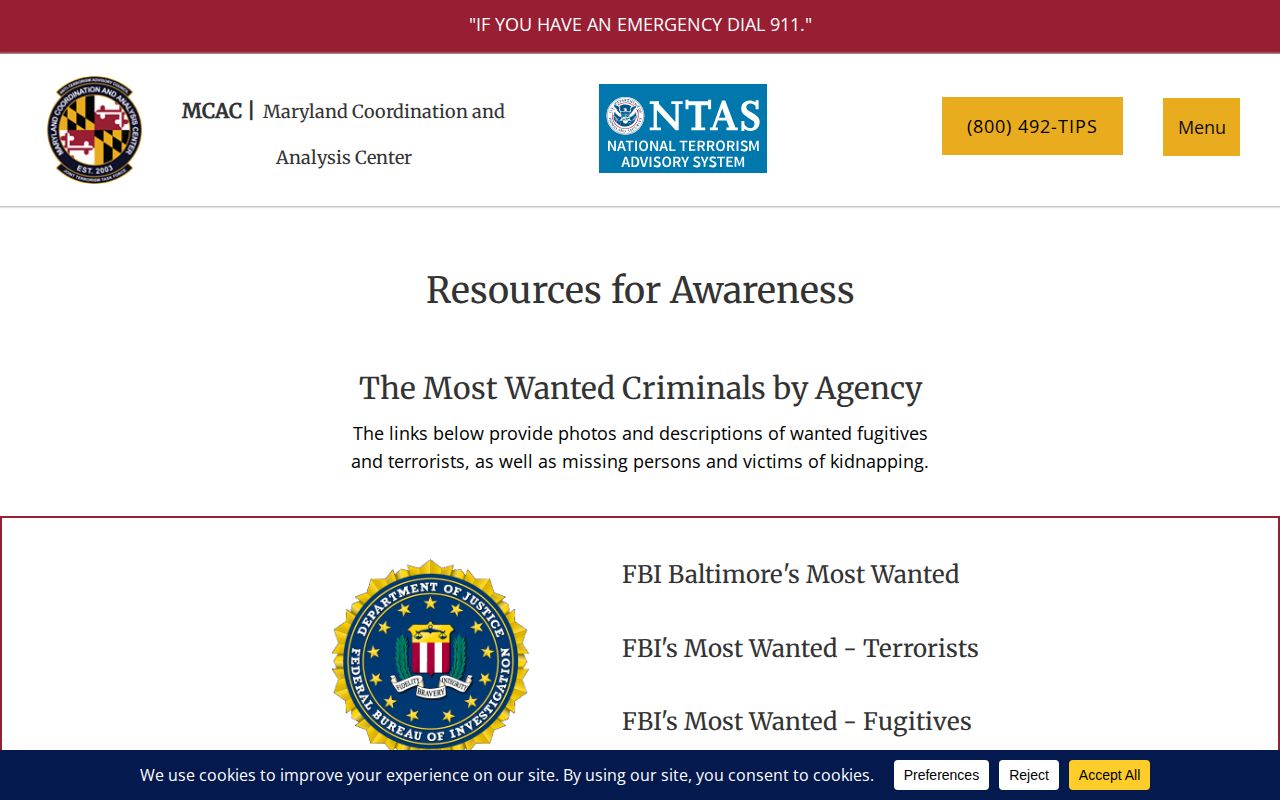
MCAC's page routes visitors to agency sources and sets an emergency and tip framework. Follow the linked agency's own instructions. Skip reposted images and old social-media copies. The DPSCS Division of Parole and Probation posts an official DPP Most Wanted route, though that link has tended to return a database or login-style error rather than a working public list. Maryland State Police describes its fugitive work, including the Maryland State Apprehension Team. The agency keeps no stable statewide most-wanted roster.
Federal fugitives are a separate trail. The U.S. Marshals District of Maryland page and the FBI Baltimore wanted page cover fugitives from their own agencies, not complete warrant databases. The Marshals' tip number is 1-888-869-4589. MCAC lists 800-492-TIPS for Maryland tips. To check a possible warrant, contact the court or law-enforcement office handling the case and get legal advice. Do not approach or confront someone on a wanted page. Use 911 for an emergency.
After Arrest: Court and Custody
Booking comes first after an arrest. It is an intake record, nothing more. A case number and a court disposition arrive later, and the booking entry alone does not track the case. For the court side, Maryland Case Search posts summaries covering many criminal, civil, and traffic matters in the District and Circuit Courts. It is not a full case file. It is not a live custody list either. Certain outcomes, among them some dismissals, not-guilty results, nolle prosequi entries, and older stet information, may drop out of the public summary. The clerk can explain how to view a complete file.
A state sentence changes the search. At that point the trail leads to DPSCS rather than a county booking roster. The agency's locator lists people committed to the Commissioner of Correction who are held in listed state settings. The agency warns that not everyone in DPSCS custody appears. Someone released is not listed either.
A federal sentence works differently. The Federal Bureau of Prisons locator covers BOP custody and offers no public photo gallery. ICE's locator uses separate identity fields and imposes timing limits, while Maryland VINE does not catch every immigration event. The Bureau of Prisons locator stands as its own federal custody search.
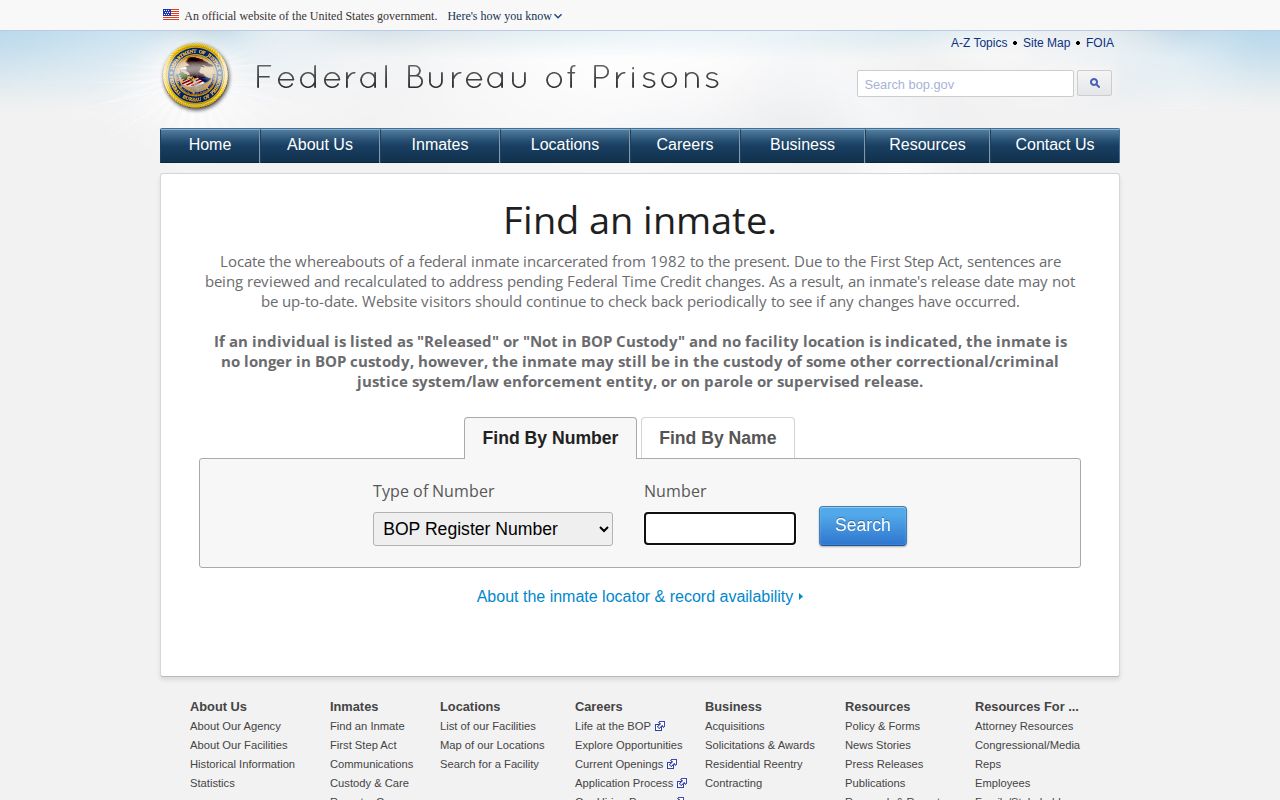
The federal locator covers BOP custody only. It offers no public booking photos. It won't replace county or federal pretrial custody sources. After an arrest, no two paths look alike. One person's arrest may end in release, a citation, a transfer, a court appearance, or a later sentence. Expungement and shielding can change what a public court search shows. An old copy held elsewhere may still remain, so confirm status with the office that owns each record instead of stitching a booking card, a news post, and a case summary into one claim.
- Booking
- Intake and record creation after a person is brought into custody.
- Arraignment
- A court event where charges are presented and a plea or next step is addressed.
- Bond
- A court-set condition for release while a case is pending.
- Disposition
- The court’s recorded outcome or status for a case.
- Expungement
- A legal process that removes qualifying case information from court and law-enforcement records under Maryland law.
Maryland Arrest Record Retention
A roster's display window is not the agency's retention period. Maryland State Archives explains that approved schedules govern how long agencies keep records. Schedules also set timing for eligible material. It may move to the State Records Center. Or it may be destroyed. No single modern statewide deadline covers every county booking photo. A sheriff, police department, or jail may use a different schedule. Schedules can change, too.
One historical State Police schedule kept mugshot negatives for ten years. They stayed in the Criminal Records Central Repository. They then moved to the State Records Center for 25 more years. Only then came destruction. That old schedule is an agency example, not a rule for today's digital county systems. The Archives' S275 prisoner-record collection spans 1811 through 1978. Its contents depend on period and volume. It may hold names, descriptors, the conviction county, and the sentence imposed. Release dates and related intake details may appear too. The Maryland State Archives schedule page explains the framework for agency retention rules.
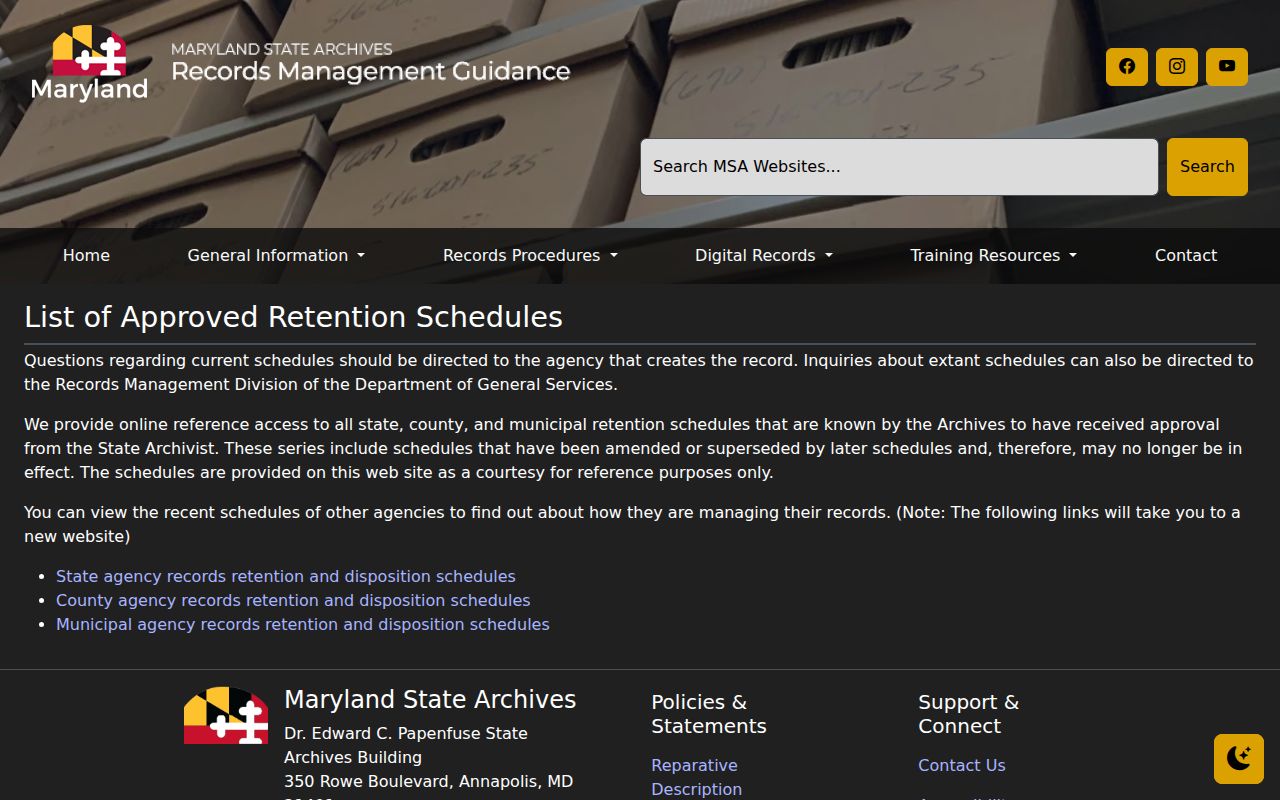
Retention schedules answer two questions: who holds the record and how long it stays. They guarantee nothing online. An old booking photo may sit in one county's files and not another's. Prison photography works differently. Series T5055 covers institutional events and other prison images. It is not a guaranteed set of modern booking photos. Some medical images remain restricted. Plan ahead for a visit. The Archives may require an appointment, an advance request, or a paid copy order. When a recent arrest record vanishes from the web, ask the Archives about a specific series. Then ask the originating agency for its current retention schedule.
Maryland VINE Arrest Alerts
Maryland VINE, also called MD4VINE, watches custody status. Register, and it can tell you when that status changes in a participating system. Alerts travel by web, phone, text, email, mobile app, and TTY. It posts no booking photos. Nor is an alert a promise that a fresh arrest appears at once. For a newly processed booking, the county custody page is the better first stop. Need the official overview? The Governor’s Office of Crime Prevention and Policy Maryland VINE page lists the state phone number. It also lists the web service. Local systems carry VINE links of their own. Maryland publishes no county-by-county service-level matrix. A VINE link does not prove equal fields or matching refresh timing across all 23 counties and Baltimore City.
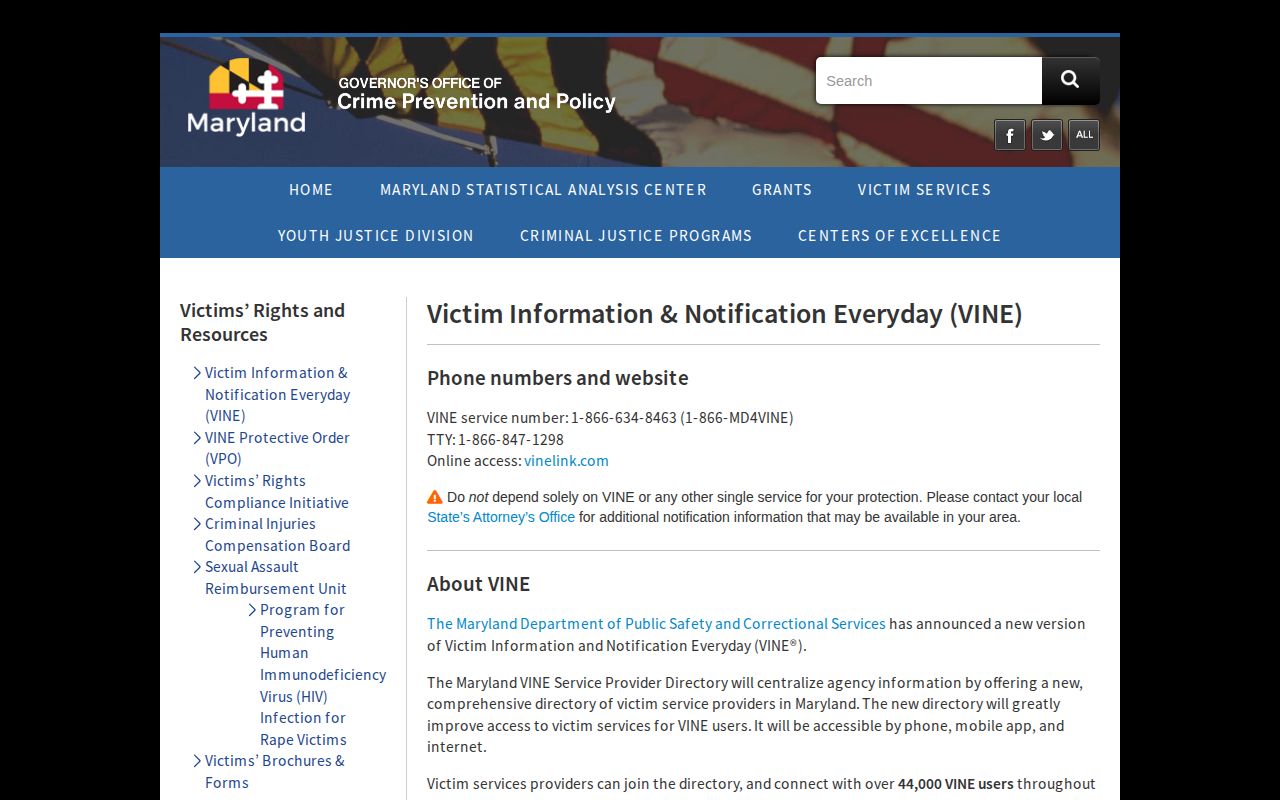
The state page also links straight to VINELink. Its contact details are official. If a new booking does not surface there, verify through the local roster or the record custodian instead of trusting an alert system alone.